AI's Last-Mile Problem
 Connect on LinkedIn
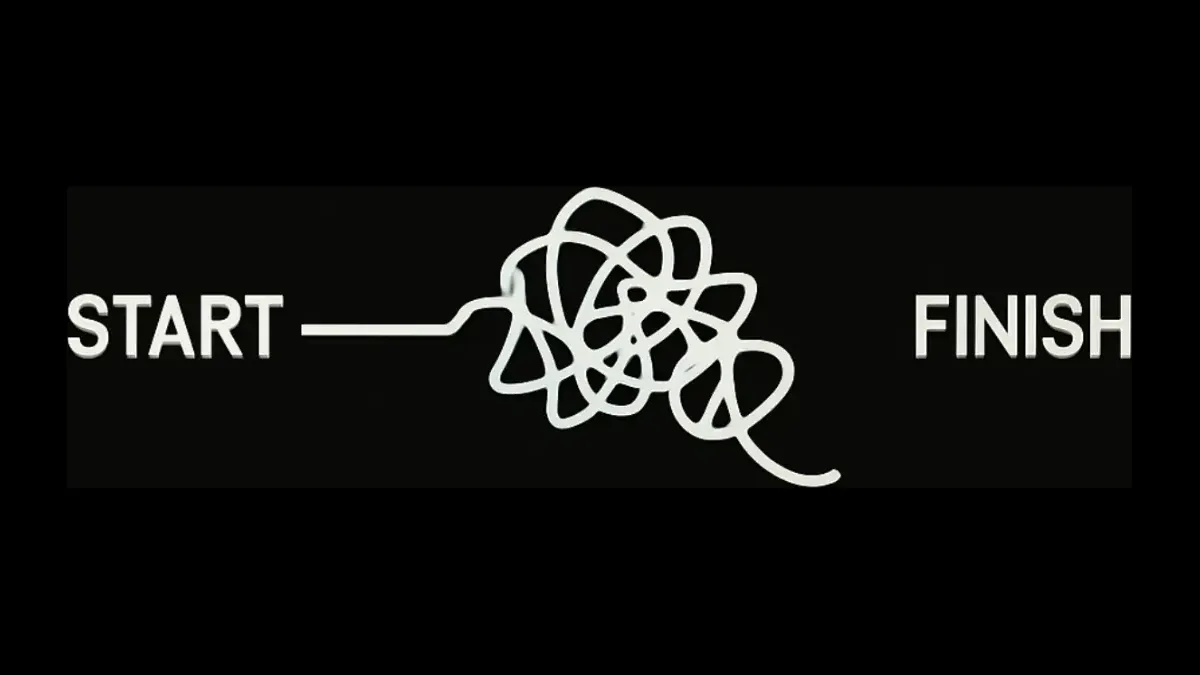
The AI revolution promised to transform marketing. Instead, most marketers are drowning in a sea of generic outputs, struggling to bridge the gap between AI's impressive demos and real campaign-ready assets. Welcome to AI's Last-Mile Problem—where the technology works perfectly in labs but fails spectacularly in real marketing workflows.
What Is AI's Last-Mile Problem?
The "last mile" in logistics refers to the final, most expensive leg of delivery—getting packages from distribution centers to doorsteps. In AI, the last mile is the gap between what foundation models can do and what marketers actually need.
Foundation models excel at:
Creating impressive demo content
Generating endless variations of generic imagery
Producing "good enough" copy for testing
But they fail at:
Trademarked brand consistency across touchpoints
Product accuracy that legal will approve
Creative precision that matches campaign strategy
Integration with existing creative workflows
The result? Marketers get stuck in an endless loop of prompting, editing, and abandoning AI-generated content because it's almost right—but never quite campaign-ready.
Why "Prompt Engineering" Isn't the Solution
The industry's response has been to train marketers in prompt engineering—as if the right combination of words will transform generic AI into brand-specific creative infrastructure. This fundamentally misunderstands the problem.
Prompt engineering assumes the issue is input quality. In reality, the issue is that foundation models are intentionally designed to avoid the specificity marketers need. They're trained to be general-purpose, legally safe, and brand-agnostic. No amount of clever prompting will make ChatGPT generate your exact product packaging or brand-accurate imagery.
The real problem: Marketers are being asked to solve an engineering problem with creative skills.
Enter Inference Pipelines and AI Orchestration
The solution isn't better prompts—it's better infrastructure. Instead of fighting against AI's limitations, smart teams are building around them using inference pipelines and AI orchestration.
Inference Pipeline: A system that routes different parts of creative work through specialized AI models, each optimized for specific brand and product requirements.
AI Orchestration: The coordination layer that ensures these specialized models work together to produce cohesive, campaign-ready assets.
Think of it like a creative assembly line where each station is powered by AI that's been fine-tuned for exactly what happens at that station—not a generic worker trying to do everything.
How This Changes Campaign Planning
Traditional campaign development follows a linear path: Strategy → Creative Brief → Asset Production → Deployment. In an AI-orchestrated world, this becomes modular and parallel.
New Campaign Architecture:
Instead of a linear waterfall, campaigns become modular systems:
1. Strategy + Creative Brief (This part stays the same)
2. Asset Requirements Mapping Break campaigns into component parts and assign each to specialized AI systems:
Hero images → Brand-specific image models
Social variants → Layout and format optimization systems
Product shots → Fine-tuned product accuracy models
Copy variations → Brand voice and messaging systems
3. Parallel Production (Everything happens simultaneously) Multiple AI systems work in parallel rather than waiting for the previous step:
While brand-specific models generate product imagery...
Copy optimization systems create message variants...
Layout systems handle composition and formatting...
Quality systems run compliance checks in real time
4. Dynamic Assembly Instead of manual review and revision cycles, orchestration systems automatically combine outputs, check for consistency, and always trigger human review.
The Competitive Advantage
While competitors struggle with prompt engineering and generic AI outputs, teams with proper AI orchestration gain three critical advantages:
Speed without sacrifice: Generate campaign-ready assets in hours, not weeks, without compromising brand standards.
Variant velocity: Create thousands of personalized, localized, or platform-specific versions from a single campaign concept.
Quality consistency: Maintain brand precision across infinite iterations because the system understands your specific requirements.
What This Means for Marketing Teams
Stop thinking like AI users. Start thinking like AI architects.
Instead of asking "How do we prompt AI better?" ask:
What specific creative tasks could be systematized?
Where do we need brand precision vs. creative exploration?
How can we build quality control into the generation process?
Campaign planning becomes infrastructure planning. Before launching campaigns, teams need to map out their AI orchestration requirements. Which models handle what? How do quality gates work? What gets human review vs. automated approval?
Creative becomes more strategic, less executional. When AI handles asset production, creative teams focus on concept development, strategic messaging, and experience design—the high-value work that actually drives business results.
The Truth
This is possible today. Forward-thinking agencies and brands are already building these systems. They're just not talking about them publicly because infrastructure advantages are competitive advantages.
But the window is closing. The teams that figure out AI orchestration first will have a 12- to 18-month head start on everyone else. After that, it becomes table stakes.
Getting Started
You don't need to build everything at once. Map out the component parts. Identify where generic AI fails and where brand-specific fine-tuning would help.
Then build one pipeline. Test it. Learn from it. Scale it.
The last-mile problem has a solution. The question is whether you'll build it or wait for someone else to solve it for you.
Ready to move beyond prompt engineering to building custom AI systems for your brand?